Pavé Diamond Ring CAD Design Guide: How to Create Perfect Stone Layouts
5 March 2026by
Deepak
| No comments yet
Understanding Pavé Diamond Rings in Jewellery Design
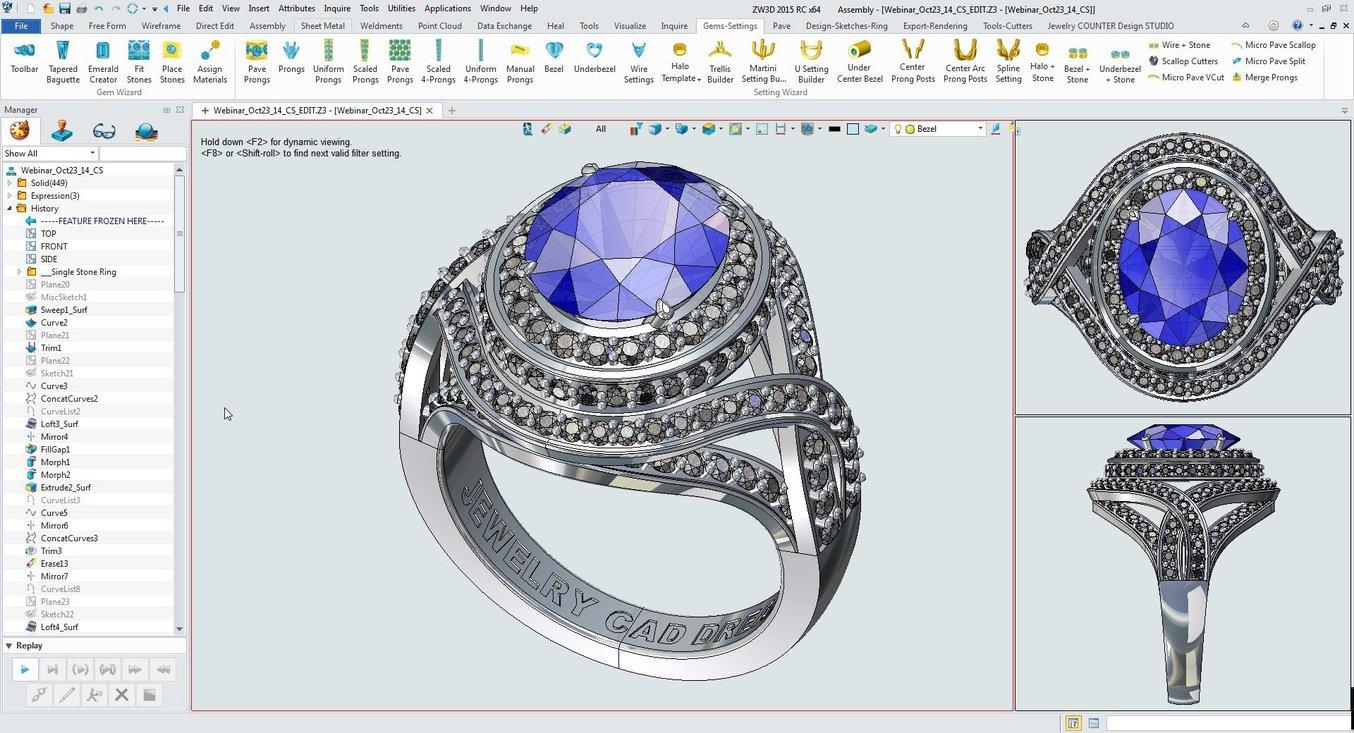
Pavé diamond rings are among the most popular styles in modern jewellery. The word pavé comes from the French term meaning “paved,” which perfectly describes how small diamonds are closely set together across the metal surface. These stones create a continuous sparkle that enhances the overall brilliance of the jewellery piece.
In jewellery CAD design, pavé settings require extremely careful planning. Even a small error in stone spacing or seat placement can make the design difficult or impossible to manufacture. Unlike solitaire rings where only one stone needs to be positioned correctly, pavé designs may include dozens or even hundreds of small diamonds.
This makes pavé CAD design one of the most technically demanding tasks in jewellery modeling. Designers must balance visual symmetry, structural strength, and manufacturing practicality.
If you want to explore pavé-style jewellery CAD models you can visit
In traditional jewellery design methods, pavé stones were often positioned manually during production. However modern jewellery manufacturing relies heavily on CAD models to guide stone placement.
Precise CAD modeling ensures that each diamond has the correct spacing and seat depth. This allows stone setters to place diamonds quickly and securely during manufacturing.
Without proper CAD preparation, pavé settings can create serious problems such as overlapping stones, uneven spacing, or weak metal support. These issues can lead to loose stones or structural failures after production.
Professional CAD designers therefore follow strict guidelines when building pavé layouts to ensure the design can be manufactured successfully.
Planning Diamond Sizes Before Starting CAD
The first step in pavé ring design is determining the correct diamond size. Pavé settings typically use small diamonds ranging from 0.8 mm to 2.0 mm in diameter depending on the design style.
Designers must carefully calculate how many stones will fit within the available surface area of the ring. If the stones are too large, there may not be enough metal between them to maintain structural strength.
If the stones are too small, the pavé effect may not be visually impactful. Proper planning ensures that the diamonds create a balanced sparkle while maintaining sufficient metal support.
Professional CAD designers often use reference grids or parametric tools to distribute stones evenly along the ring surface.
Creating the Base Ring Structure for Pavé Designs
Before placing diamonds, the base ring structure must be modeled in CAD. The ring shank acts as the foundation that supports the pavé setting.
The top portion of the ring where diamonds will be placed must have enough thickness to hold the stone seats and beads. If the metal is too thin, the setter may not be able to secure the diamonds properly.
Most pavé rings require at least 1.6 mm to 2.0 mm of metal thickness in the pavé area before polishing. This ensures that enough metal remains after finishing processes.
Smooth curvature is also important to ensure that stones follow the natural shape of the ring.
Designing Accurate Diamond Seats
Diamond seats are small grooves where the diamonds rest before being secured by metal beads. These seats must be positioned at the correct depth and angle so that the diamonds sit evenly.
If the seat is too shallow, the diamond may sit too high and become unstable. If the seat is too deep, the diamond may sink into the metal and lose its brilliance.
Designers must also consider the pavilion angle of the diamond when creating the seat. The seat should support the stone without touching the pavilion tip.
Accurate seat placement ensures that setters can work efficiently during production.
Maintaining Proper Spacing Between Diamonds
Stone spacing is one of the most critical aspects of pavé CAD design. Diamonds must be close enough to create a continuous sparkle, but they also require enough metal between them to form secure beads.
Typical pavé spacing ranges between 0.15 mm and 0.25 mm depending on the diamond size and metal type.
This small amount of metal allows setters to raise beads that hold the diamonds securely in place.
If stones are placed too close together, the metal between them may break during setting. If stones are spaced too far apart, the pavé effect will not look continuous.
Achieving the right balance requires careful measurement and consistent spacing throughout the design.
Designing Beads That Hold Pavé Diamonds
Beads are tiny metal prongs that hold pavé diamonds in place. These beads are created by raising small portions of metal between stones.
In CAD modeling, designers often include small reference bumps where beads will later be formed by the setter. These guides help ensure that beads are placed correctly during production.
The bead size must be proportional to the diamond size. Beads that are too small may not hold the stone securely. Beads that are too large can reduce the visible sparkle of the diamond.
Proper bead design improves both the security and visual quality of pavé settings.
Avoiding Common Pavé CAD Design Mistakes
Many beginner CAD designers encounter problems when designing pavé rings. One common mistake is placing diamonds on surfaces that are too curved. This can cause stones to tilt at different angles, making them difficult to set.
Another mistake is ignoring metal thickness. Pavé rings often require reinforced areas beneath the stones to maintain structural strength.
Designers must also ensure that stones do not intersect with each other or with internal surfaces of the ring. Overlapping geometry can cause serious problems during manufacturing.
Careful inspection of the CAD model before production can prevent these issues.
Rendering Pavé Diamond Rings for Marketing
High quality rendering is essential for showcasing pavé jewellery designs. Because pavé rings contain many small diamonds, lighting must be carefully configured to highlight the sparkle of each stone.
Rendering engines simulate how light reflects and refracts through the diamonds. This creates the brilliant sparkle that makes pavé rings visually appealing.
For jewellery businesses selling online, realistic renders can significantly improve product presentation and customer interest.
You can explore pavé jewellery designs and other CAD models here
Before sending a pavé ring design for production, the CAD model must be checked carefully. Designers should verify that all stone seats are correctly positioned and that metal thickness meets manufacturing standards.
The model should also be free of geometry errors such as open edges or intersecting surfaces. Clean CAD geometry ensures that the design can be 3D printed or cast successfully.
Once the CAD file passes these checks, it can be exported in formats such as STL for production.
Proper file preparation reduces manufacturing errors and ensures consistent quality.
Why Professional Pavé CAD Design Matters
Pavé settings require a high level of precision and experience. Even small mistakes in CAD modeling can lead to loose stones or structural weaknesses.
Professional CAD designers understand how to balance aesthetics and manufacturing requirements. They ensure that pavé designs are both visually stunning and structurally secure.
For jewellery businesses looking to create pavé designs or other CAD jewellery models you can visit
Pavé diamond rings are one of the most beautiful and technically challenging jewellery designs. Their brilliance comes from the careful placement of many small diamonds across the metal surface.
Successful pavé CAD design requires precise stone spacing, accurate seat placement, and strong metal support. Designers must carefully plan the diamond layout and verify structural integrity before manufacturing.
By following professional CAD design practices, jewellery designers can create pavé rings that are both visually stunning and durable in everyday wear.
As CAD technology continues to evolve, designers will gain even more tools for creating intricate pavé jewellery designs with greater efficiency and precision.
 | No comments yet